 ES
ES  EN
EN  FR
FR  NL
NL  TR
TR  DE
DE  AR
AR 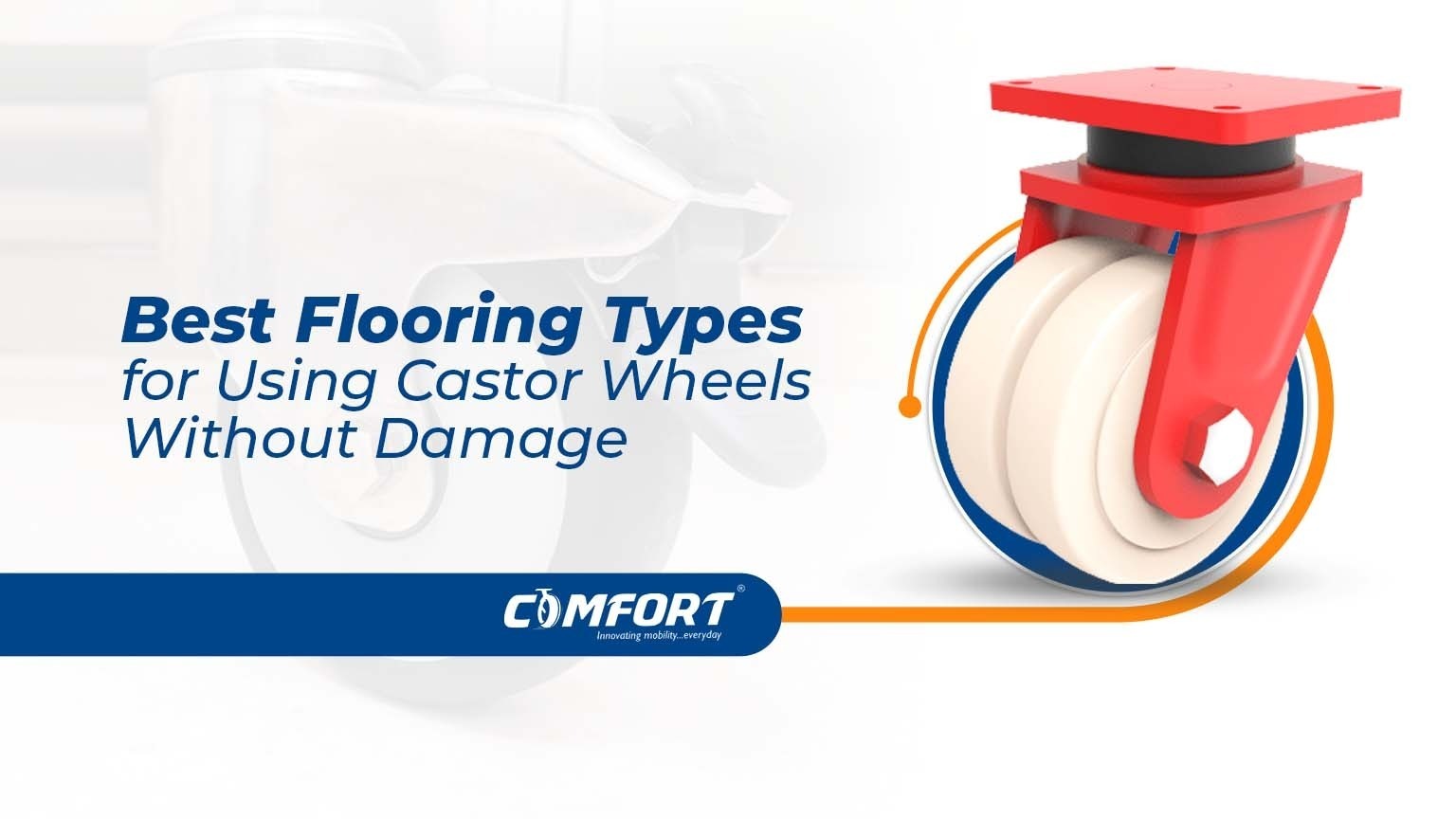
Introduction
Castor wheels are small but very important parts of many industries, offices, and shops. They help in moving heavy machines, trolleys, and furniture easily. But one common problem people face is floor damage. If the wrong type of castor wheel is used on the wrong floor, it can leave scratches, dents, or even cracks.
That is why choosing the right flooring type and the right castor wheel is very important. At Comfort Castors, we understand that both the wheel and the floor must work together. In this blog, we will explain the best flooring types for using castor wheels without damage, along with simple tips to keep both your wheels and floors safe.
Why Floor Protection Matters with Castor Wheels
When castor wheels roll on the floor, they apply weight and friction. If the floor is soft or weak, the pressure can damage it. For example, moving heavy machinery on marble floors with hard iron wheels can cause deep scratches.
Using the right flooring type ensures:
- Longer life of the floor.
- Smooth movement of trolleys and machines.
- Lower maintenance cost.
- Safety for workers.
This is why Indian industries, hospitals, offices, and warehouses prefer to match the right flooring with the right castor wheels.
Best Flooring Types for Castor Wheels
- Concrete Flooring
Concrete is one of the most common floors used in Indian warehouses, factories, and workshops. It is strong and can handle heavy loads.
- Best wheels for concrete: Polyurethane (PU) castor wheels.
- Why PU wheels? They absorb shocks, move smoothly, and prevent cracks on concrete.
- Benefit: Long life for both wheels and floors.
At Comfort Castors, our PU heavy duty castor wheels are specially designed for rough concrete floors.
- Epoxy-Coated Flooring
Many modern factories and showrooms use epoxy-coated floors. These floors are smooth, shiny, and dust-resistant.
- Best wheels for epoxy floors: Rubber castor wheels or PU wheels.
- Why? They give soft movement and do not leave marks on shiny surfaces.
- Benefit: Perfect for industries where cleanliness and looks matter, electronics, and food processing.
👉 Comfort Castors rubber wheels are non-marking and ideal for keeping epoxy floors scratch-free.
- Tile Flooring
Tiles are used in offices, malls, hospitals, and sometimes even in small factories. But tiles can easily crack under heavy weight.
- Best wheels for tile floors: Soft rubber wheels or Thermoplastic Rubber (TPR) wheels.
- Why? They spread the load evenly and reduce pressure on the tile surface.
- Benefit: Prevents cracks and keeps tiles safe.
👉 Our Comfort Castors TPR wheels are specially made to protect delicate flooring like tiles.
- Vinyl Flooring
Vinyl is common in hospitals, labs, and offices because it is smooth and easy to clean. But it is soft compared to concrete.
- Best wheels for vinyl: Soft PU or TPR wheels.
- Why? They reduce wear and avoid cutting marks on soft vinyl.
- Benefit: Best for hospital beds, office chairs, and lab trolleys.
👉 Comfort Castors medical-grade castor wheels are designed to protect vinyl floors in healthcare facilities.
- Marble and Granite Flooring
Many premium showrooms, hotels, and offices in India use marble or granite for beauty and durability. But these floors are expensive and need protection.
- Best wheels for marble and granite: Non-marking PU or rubber wheels.
- Why? They prevent scratches and black marks.
- Benefit: Keeps the shine of marble and granite intact.
👉 Heavy duty Comfort Castors PU wheels give smooth movement without damaging premium stone floors.
- Outdoor Flooring (Cement, Asphalt, Pavers)
For airports, construction sites, and outdoor factories, the floor may be cement, asphalt, or paver blocks. These floors are rough and uneven.
- Best wheels for outdoor use: Pneumatic castor wheels or solid rubber wheels.
- Why? They absorb shocks, handle bumps, and move easily on uneven ground.
- Benefit: Safe and reliable for outdoor heavy-duty tasks.
👉 Comfort Castors pneumatic wheels are trusted by industries that need mobility on rough outdoor floors.
Factors to Consider for Floor Safety
When choosing castor wheels for your flooring, always check:
- Load Capacity – Heavier loads need stronger wheels with larger surface area.
- Floor Hardness – Softer floors (vinyl, tiles) need soft wheels, harder floors (concrete, granite) need PU or metal-core wheels.
- Movement Frequency – Frequent movement needs non-marking and smooth wheels.
- Environment – Wet or chemical areas require anti-corrosive castors.
👉 At Comfort Castors, we provide expert guidance to help you select the right wheel for your specific floor and usage.
Tips to Prevent Floor Damage from Castor Wheels
- Always use non-marking wheels on premium floors.
- Keep floors clean from dust and small stones (they cause scratches).
- Lubricate and maintain wheels regularly.
- Use larger wheels for heavy loads to distribute pressure.
- Choose branded and quality castors like Comfort Castors to ensure durability.
Why Choose Comfort Castors?
- Export Quality Products: Trusted in 25+ countries.
- Wide Range of Wheels: PU, rubber, nylon, TPR, pneumatic, and more.
- AERB and Quality Standards: International certifications for durability and safety.
- Custom Solutions: Wheels designed for different floors and industries.
- Indian Expertise: Made in India, trusted worldwide.
When it comes to protecting floors while ensuring smooth movement, Comfort Castors has been the reliable partner for industries, hospitals, warehouses, and offices across India.
Conclusion
The type of flooring plays a big role in the performance of castor wheels. Concrete, epoxy, vinyl, tiles, marble, and outdoor surfaces—all need the right match of wheels. Using the wrong wheel can cause expensive damage, while the right wheel can save money and time.
With Comfort Castors, you get the perfect solution for every floor type. From warehouses to hospitals, from showrooms to airports, our castor wheels keep both your floors and your equipment safe.
So, the next time you choose castor wheels, remember: it’s not just about movement, it’s also about protecting your floors for years to come.